Maximizing the conditioning process: the impact of AVI-MUL TOP GP10 on heat and moisture management.
What is the conditioning process?
The conditioning process is the most important step of the feed production process, as it is the one which has the bigger impact on pellet quality. Despite this, quite often its potential is underestimated.
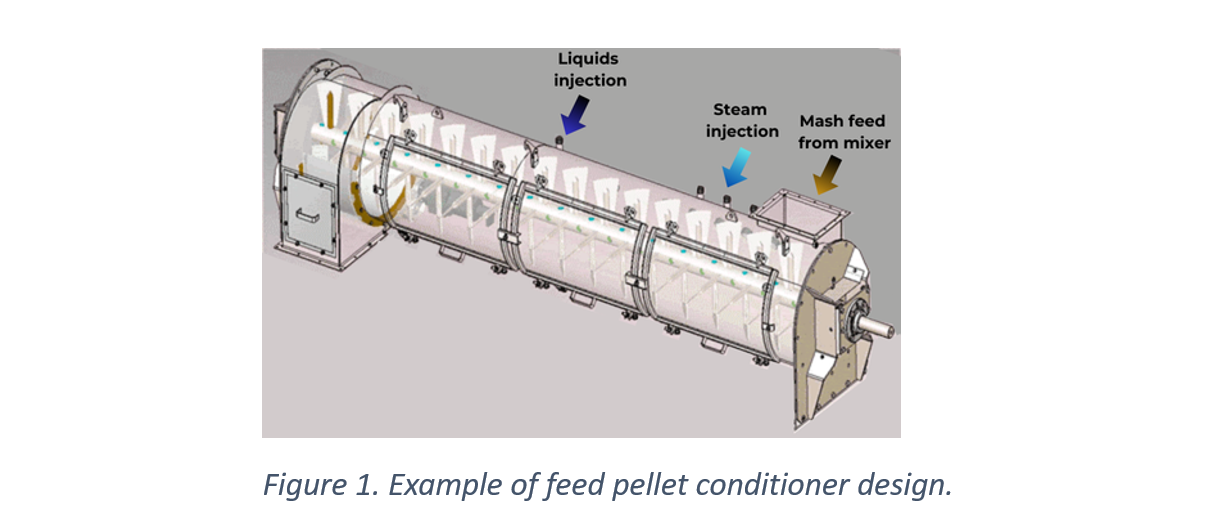
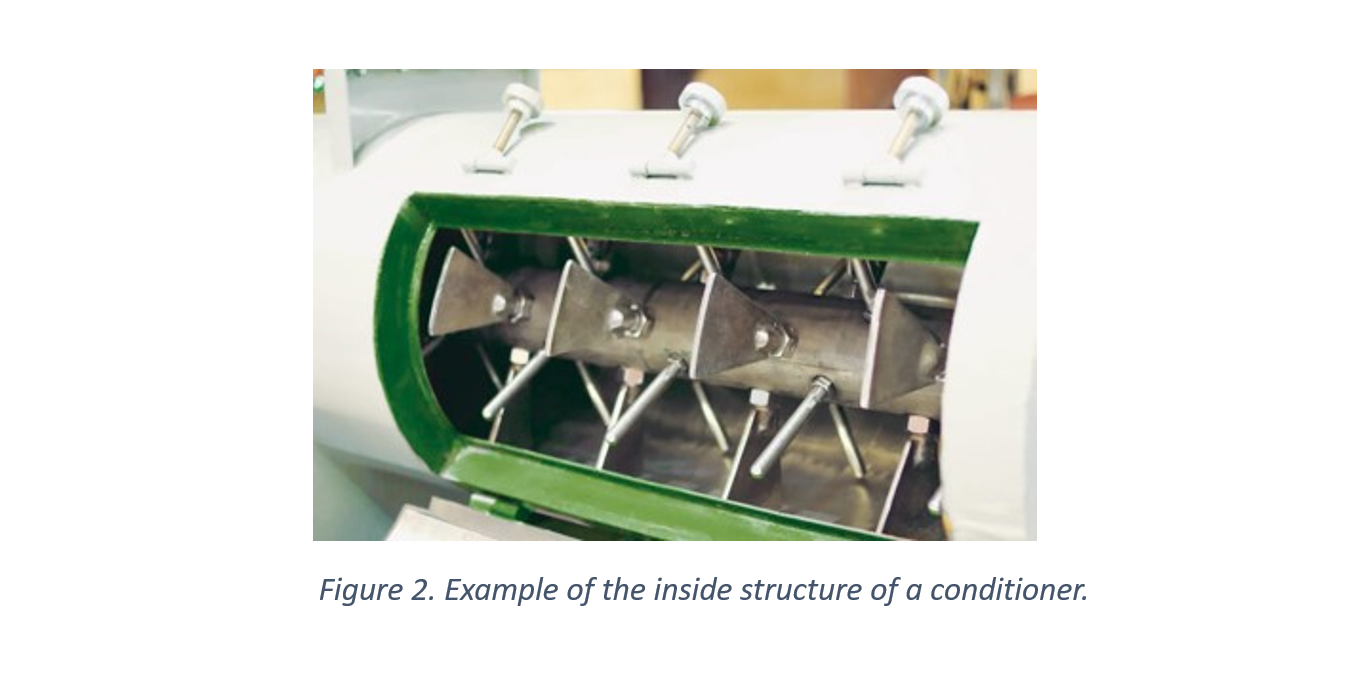
Conditioning consists in every treatment or addition made to the feed mash after the mixer and before entering the pellet die chamber. This can include steam and/or water addition, and several processes such as expanding, compacting or pre-pelleting.
Particularly, adding steam introduces heat and moisture to the mash feed, which results in increased lubrication for faster and optimal production and starch gelatinization, an essential step to enhance the digestibility of nutrients contained in feed
What is the target moisture level during conditioning?
Depending on feed raw materials and on climatic conditions, the ideal moisture content in the conditioner is between 15 to 16.5%.
Generally, we should add 1% moisture to the pellet for each 12.5 °C increase in mash temperature from steam (Bortone, 2014).
As an example, if the initial mash temperature is around 20 °C, and our target level is 85 °C, we should add ~5% moisture.
In this way, if the starting mash moisture is 10.5%, the final level in the conditioner will be 15.5%.
Including AVI-MUL TOP GP10 into the formulation ensures that the moisture added during conditioning is evenly distributed and effectively absorbed by the feed particles, thus avoiding moisture losses.
This results in high-quality feed while preventing the excessive use of steam or water during production, leading to cost savings.
Why is steam quality important?
A very important factor to consider during the conditioning process is the steam quality. To achieve optimal penetration into the feed particles, steam must be dry (or saturated).
A reliable indicator of good steam quality is it’s not being white along the process flow: white steam indicates presence of condensed droplets and, hence, of a wet steam with lower efficacy. In fact, in case of wet steam, the heating potential is lower and this forces to use higher temperature and more steam, which brings extra not necessary water to the feed. This additional steam can over-lubricate the feed mash, leading to pellet mill blockage.
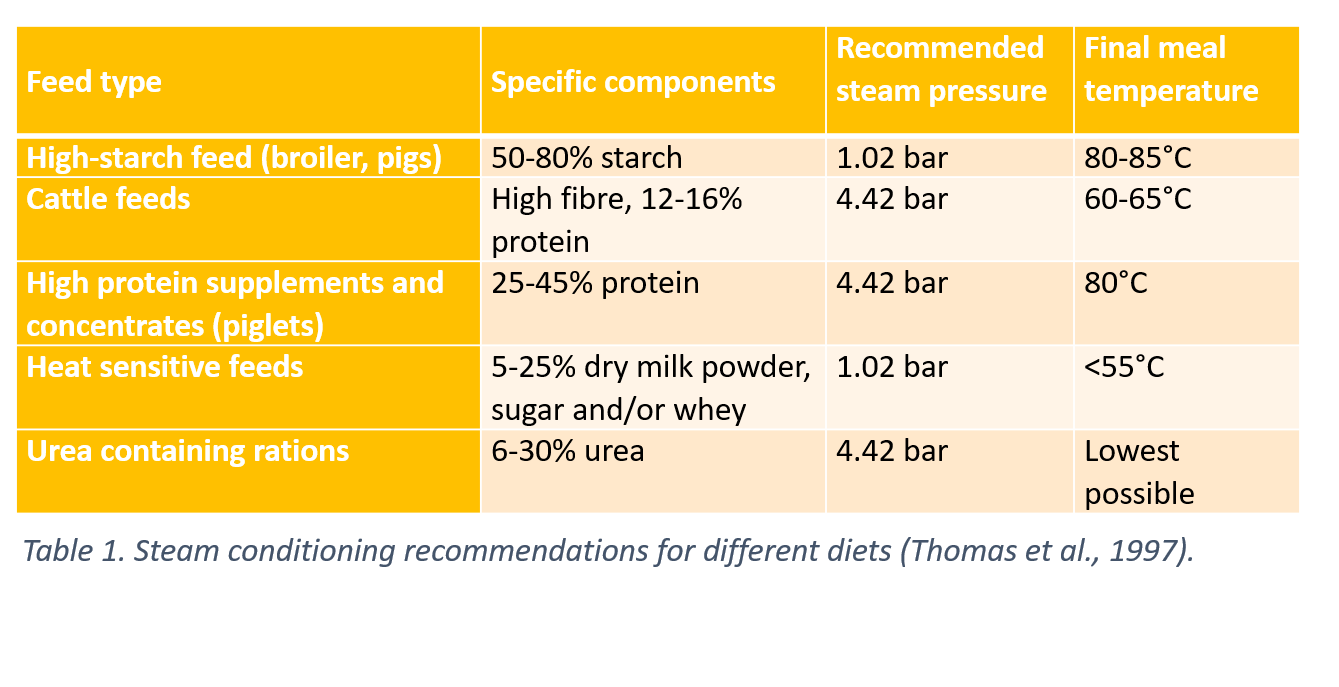
The optimal steam pressure and temperature that should be added into the conditioner depend on the type of feed being produced, as showed in Table 1.
The presence of AVI-MUL TOP GP10 helps the mash to absorb steam more effectively, distributing it consistently among all the feed particles. This leads to a more homogeneous mash and reduces the amount of steam needed to achieve the desired moisture and temperature levels. As results, we have a more efficient use of energy and better control over the conditioning process.
How conditioning influences starch gelatinisation?
During the conditioning process the feed mash is submitted to heat and moisture, which cause the starch granules to swell and absorb water from the steam.
This results in the breaking down of the hydrogen bonding between amylose and amylopectin which gives the mixture a characteristic gluing property that allows the feed particle to adhere to each other when passing through the pellet die resulting in increased pellet hardness and durability.
Moreover, after gelatinization process, amylose and amylopectin chains are more exposed to the hydrolytic action of digestive enzymes (e.g. α-amylase), which improves starch absorption and utilization in the intestine.
By promoting a uniform distribution of heat and moisture inside the mash, AVI-MUL TOP GP10 helps to achieve the right gelatinisation temperature and guarantees a consisten hydration of the starch granule. This allow the granule to swell and break down uniformly, thus facilitating a complete starch gelatinisation and leading to the production of strong and durable pellets, less fines and improved feed digestibility.
In conclusion, how to maximize the conditioning process?
To optimize the conditioning process, it is fundamental to use dry steam and to target the right moisture and temperature levels, which help to obtain a proper starch gelatinization.
Moreover, the inclusion of a high-quality ingredient like AVI-MUL TOP GP10 optimizes the heat and moisture absorption, ensuring optimal conditioning and, thus, high quality feed.
Contact us to receive more information on how to improve the conditioning process and discover more benefits of AVI-MUL TOP GP10!